Industry
Sports & Outdoor
In sport and outdoor the fabric is the product. A stretch recovery, a water column, an insulation value is a claim someone can test, so the mill's data and the factory's machinery matter more than the pattern — and the technical fabric is almost always the long pole in the timeline.
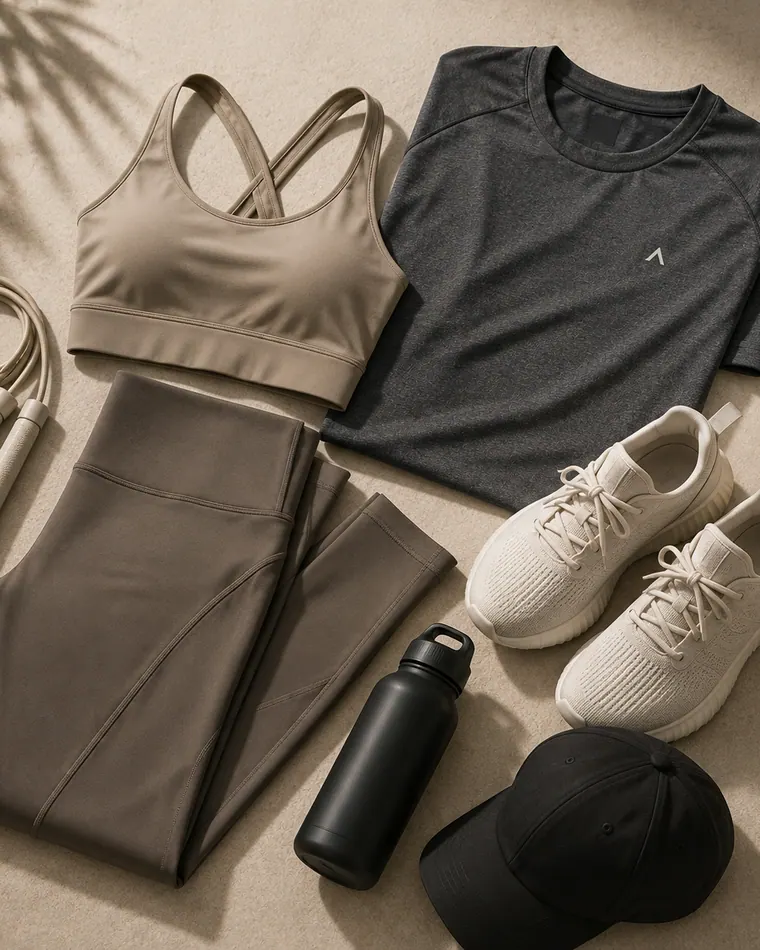
You are buying performance, and performance has to be evidenced
Everything in this category is sold on a claim that can be measured. Stretch and recovery, moisture management, a water column, seam sealing, insulation warmth, abrasion resistance — each is a property of a specific material with test data behind it, which means the mill's evidence is part of what you are buying and a fabric named only by composition tells you almost nothing. Two 4-way stretch knits with the same fibre content can behave completely differently after repeated washing, and the customer experiences that as the brand having lied.
Technical fabric is also the timeline. Membranes, laminates, high-performance knits and specialist insulation carry longer lead times and higher minimums than ordinary cloth, frequently set per colour, so fabric booking usually has to happen before a factory is fully negotiated — the reverse of the comfortable order. A range that adds colourways late is a range that either misses a season or pays for it, and the mill's calendar, not the garment factory's, is what sets the drop date.
Construction needs specific machinery, and the list is not what a general apparel factory has. Flatlock and coverstitch for next-to-skin garments, seam taping and welding for waterproof shells, down or synthetic fill lines for insulation, bonded and laser-cut edges for compression garments. A factory without the machine cannot make the product, however good it is at woven shirts, and this is the single most common mismatch in the category.
Two more things separate this from ordinary apparel. The chemistry of water-repellent finishes is under active regulatory and buyer pressure, and PFAS-free alternatives behave differently in real use — so that decision is simultaneously a compliance decision and a performance one, and it deserves to be made deliberately rather than inherited from a mill's default. And anything load-bearing or protective — climbing hardware, helmets, protective padding, child carriers — belongs to a personal protective equipment regime with its own conformity requirements, and needs specialist assessment rather than being treated as an accessory.
For brands whose product is judged in use, not on a rail
Situations we see here often, not an exhaustive list.
- Established apparel brands adding a technical line their current factory cannot make
- Outdoor brands developing shells, insulation or technical layers
- Activewear and athleisure brands where fabric performance is the positioning
- Retailers building a private label sports range with real performance claims
- Studio, gym and fitness brands sourcing branded apparel and equipment
What Library of Trade helps with
The points this category asks for most often, not everything we do.
-
Fabric sourced on evidence
We source technical fabric at mill level and ask for the test data behind the performance claim, so a specification says what the material does rather than only what it is made of.
-
Fabric booked early
Because technical cloth carries the longest lead and the highest minimums — often per colour — the material plan and the colour count are settled early, since that is what really sets the drop date.
-
Factories matched by machinery
Flatlock, coverstitch, seam taping, welding, bonding and down filling are specific capabilities. We match to the machine the product needs and to a factory with a record in that construction.
-
Performance retested on bulk
A claim proven on a sample is not a claim proven on production, so key performance tests are repeated on bulk fabric and finished garments rather than assumed from the development stage.
-
Finish chemistry decided deliberately
Water-repellent finishes are compared on both performance and regulatory direction, so a PFAS-free route is chosen with its behaviour understood rather than adopted late under pressure.
-
Protective products flagged honestly
Where a product falls into a protective-equipment regime we say so and route it to specialist assessment. We will not treat a load-bearing or protective item as ordinary apparel.
How Library of Trade sources this category
-
01
Brief
The activity the product is for and the performance it must deliver, the claims you intend to make, quantity per style and colour, target cost, and the season it has to land in.
-
02
Product Development
Fit under movement, panel and seam engineering, stretch and recovery targets, compression and support requirements, and a technical specification that states performance as well as measurements.
-
03
Materials
Technical fabric first — membranes, laminates, stretch knits, insulation, linings — with mill test data, plus the finish chemistry, zippers, elastics and trims rated for the use.
-
04
Factory Matching
Matching on the machinery the construction needs: flatlock and coverstitch, seam taping or welding, bonding, down filling — plus capacity in your window and audit and certification status.
-
05
Sampling
Fit samples worn in motion rather than on a table, then performance samples: wash-after-wear cycles, water column and seam testing, insulation checks, and abrasion where it applies.
-
06
Production
Fabric booking is the critical path, so production is scheduled around mill delivery; cutting, specialist seaming, taping or filling, and finishing follow once the cloth actually lands.
-
07
Quality
Performance retested on production fabric and finished garments, seam and tape integrity, measurement against tolerance, colour and finish consistency, inspected to an agreed AQL.
-
08
Logistics
Insulated and camping goods are cube-heavy, so compression packing and container fill matter; origin and duty treatment are modelled alongside the freight mode and the season date.
Materials, processes and supplier types
A selection of what comes up in this category, not a complete list. If your material, process or supplier type is not here, name it in your brief.
Materials
- Nylon and elastane performance knits
- Recycled polyester (GRS-certified options)
- Waterproof breathable membranes and laminates
- Ripstop and softshell wovens
- Synthetic insulation and responsibly sourced down
- Merino and merino blends
- PFAS-free water-repellent finishes
- Waterproof zippers and seam tape
Processes
- Flatlock and coverstitch seaming
- Seam taping and welding
- Bonding and laser cutting
- Down and synthetic fill blowing
- Sublimation and transfer printing
- Laminating and coating
- Water column and hydrostatic testing
- Wash-after-wear performance testing
Supplier types
- Technical fabric mill
- Laminator and coating specialist
- Activewear cut-and-sew factory
- Technical outerwear factory
- Down and insulation filling plant
- Hard goods and equipment manufacturer
- Accredited performance testing laboratory
- Third-party inspection partner
Quality, compliance and risk
The checks that apply here most often. What your product needs is decided per project.
The distinctive thing about quality here is that most of it is not visual. A shell can be sewn beautifully and leak at the seams; a legging can look perfect and go transparent when stretched; an insulated jacket can be the right weight and lose loft after a wash. So the quality plan is a test plan: stretch and recovery, water column and seam integrity, insulation performance, abrasion, pilling and colourfastness — measured on production fabric and finished garments, not inherited from a development sample. The mill's original report describes the cloth it was run on, which is not automatically the cloth in your order.
Performance claims deserve particular care because they are the marketing. If a jacket is sold on a water column figure or a fabric on a recycled percentage, that number is an assertion about the goods and needs evidence that matches the production. This is also where voluntary schemes appear: GRS and OEKO-TEX are schemes a supplier chooses, and a responsible down standard is likewise a voluntary programme — valuable, frequently required commercially by retailers, and not a legal condition of sale.
Two areas need naming plainly. Water-repellent finish chemistry is under active regulatory and buyer pressure, so the choice between a conventional and a PFAS-free finish should be made knowingly, with the performance difference tested rather than assumed. And protective and load-bearing equipment — helmets, climbing hardware, protective padding, child carriers — falls under personal protective equipment requirements with their own conformity assessment, which is specialist work. Requirements are product-specific, and we will say when something needs an assessment rather than implying we can source it as ordinary apparel.
- Performance tests defined at the specification stage and repeated on bulk fabric, not only on the sample
- Water column, seam and tape integrity verified on finished garments for anything sold as waterproof
- Stretch and recovery, opacity under stretch, and pilling tested after repeated wash-and-wear cycles
- Insulation weight, loft and distribution checked, since fill is easy to reduce quietly between orders
- Finish chemistry specified explicitly, with a PFAS-free option evaluated on performance as well as compliance
- Voluntary scheme claims — recycled content, responsible down — traced through the chain with documentation
- Protective and load-bearing products routed to specialist conformity assessment rather than standard inspection
Sourcing regions
Regions that often come into play for this category. Not a ranking and not a complete list.
-
Vietnam
The strongest single route for technical outerwear, activewear and insulated products, with seam-sealing and down-filling capability at scale and a compliance culture European buyers find workable. Technical fabric is largely imported, so material lead time and origin are the things to verify rather than assume.
-
China
The broadest capability across the whole category, including hard goods, equipment, components and a substantial technical fabric base in one place. It is usually the most complete route for a range that spans apparel and equipment, with sea transit and larger minimums as the trade-off.
-
Taiwan
A material rather than an assembly route: some of the most advanced technical fabric, membrane and laminate development sits here. Fabric is often bought from Taiwanese mills and cut in a lower-cost country, which is a very common and sensible split.
-
Turkey
Capable knit activewear manufacture with vertical mills and short transit into Europe, which makes smaller runs and in-season repeats realistic. Costs sit between Asia and Western Europe, and speed is what you are paying for.
-
Portugal
Small-run activewear and knit performance products with high standards and the shortest lead times into European markets. Unit cost is high and minimums are low, which suits a launch range or a style being proven before scale.
Questions about this category
Why is technical fabric the thing that decides our timeline?
Because membranes, laminates and high-performance knits are made to order with longer lead times and higher minimums than ordinary cloth, and those minimums are frequently per colour. The garment factory can usually be found quickly; the fabric cannot be conjured, which is why fabric booking and the colour count are the first commercial decisions.
Can our current apparel factory make waterproof jackets?
Only if it has the machinery. Seam taping and welding are specific processes with specific equipment and specific operator skill, and a factory without them cannot produce a waterproof garment however well it sews. It is worth asking to see the machine and the taping records rather than accepting a yes.
How do we substantiate a performance claim like a water column figure?
With test data on the material and on the finished garment, generated on the production run rather than on the development sample. A mill report describes the cloth it was run on; retesting bulk fabric and finished garments is what makes the claim true about the goods you are actually selling.
Should we move to a PFAS-free water-repellent finish?
The regulatory and buyer direction clearly favours it, and the honest caveat is that PFAS-free finishes behave differently — typically on oil repellency and on how the performance holds up with wear and washing. The right process is to decide the performance the product must deliver, test the alternative against it, and adjust the design or the claim accordingly.
Do you source helmets, climbing gear or protective equipment?
Products that protect the user fall under personal protective equipment requirements with their own conformity assessment, so we treat them as specialist cases needing product-specific assessment rather than as ordinary sports goods. We would rather tell you that than take on a product that needs a regime we do not claim.
What minimums should we expect for an activewear range?
Usually the fabric minimum rather than the factory minimum, and typically set per colour by the mill. That means the colour count drives the commitment more than the size range does, which is why a first range is often best launched narrow in colour and complete in sizes.
Related reading
Related industries
Bring us the brief. We'll build the chain.
Send the product, the performance it has to deliver and the season it has to land in, and we will come back with the fabric route, the factory options and the delivered cost.