Industry
Pet Products
Pet products are tested by being destroyed. A chew toy has to fail safely, a harness has to hold a lunging dog, and a bed has to survive washing — so the specification is about load, durability and materials in the mouth rather than about appearance.
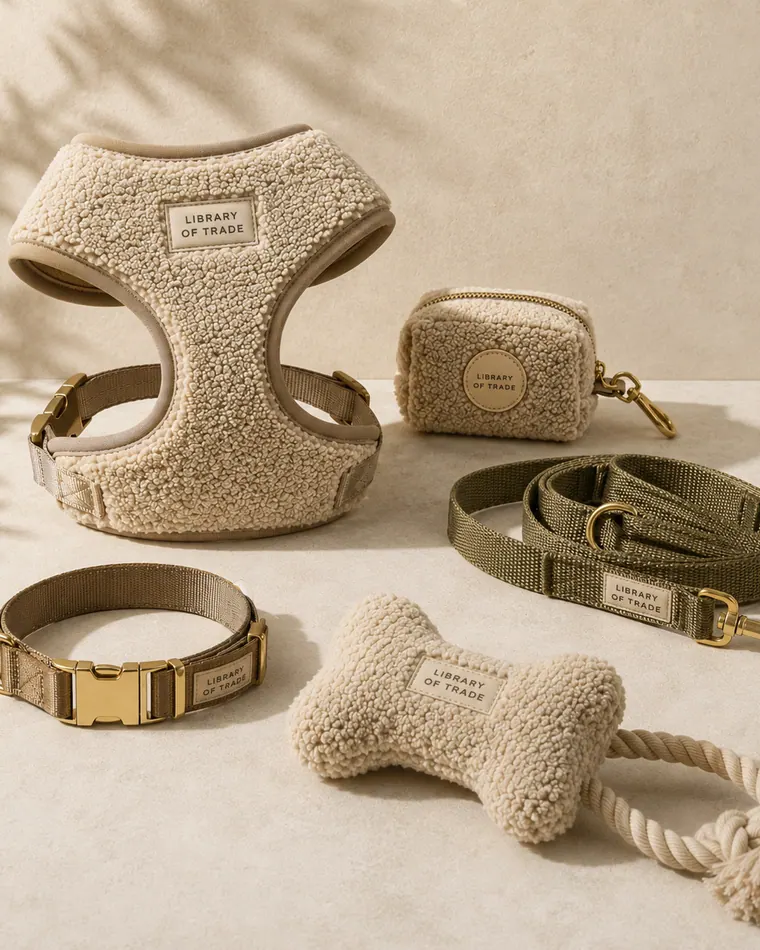
The buyer sets the safety standard, because no one else does
This is the category's defining feature and it surprises people: children's toys have a dedicated EU safety regime, and pet toys do not. Pet products are consumer goods and sit under the general product-safety framework, with chemical restrictions applying to materials, but there is no equivalent prescribed test suite for a dog toy. That means the standard is whatever the buyer specifies — and if the buyer specifies nothing, the standard is whatever the factory was already doing. Serious brands in this category write their own test protocol, borrowing from children's-product methods where they make sense: small-parts detachment, seam and stitch strength, tensile pull, and destructive chew testing to a stated intensity.
Anything load-bearing is a safety product whether or not it is regulated as one. A collar, a lead, a harness or a carrier handle has a load path, and a failure is a dog in traffic — so pull strength at the hardware and at the bartacks is a specification with a number behind it, verified by testing rather than by inspection. Buckles, D-rings and snap hooks are the components that fail, and they are bought from a different supplier from the webbing they are stitched to.
Sizing multiplies everything. A collar or harness range across breeds is a size ladder, and each size is effectively its own SKU with its own pattern, its own hardware size and its own share of a minimum. A range that looks like six products on a website is often thirty manufactured items, which is why minimums in this category feel high relative to the sales value of any single size — and why the size ladder itself is a commercial decision, not just a fitting one.
Material choice is driven by what goes into a mouth. Buyers routinely specify food-contact-grade plastics, non-toxic dyes and known rubber compounds for bowls, feeders and chews even where no rule compels it, because the alternative is trusting a substitution you did not authorise. And products are usually mixed assemblies — webbing plus hardware plus textile plus fill — which means several upstream suppliers and several places for an unapproved change to enter.
For brands whose customers judge the product by how long it lasts
Situations we see here often, not an exhaustive list.
- Importers who need a documented test protocol behind what they are already selling
- Ecommerce and DTC pet brands moving from stock designs to their own products
- Retailers and pet chains developing private label ranges
- Vet, groomer and specialist brands taking a professional product to retail
- Lifestyle and home brands extending into pet with a design-led range
What Library of Trade helps with
The points this category asks for most often, not everything we do.
-
A written test protocol
Because the category has no prescribed test suite, we help define one: pull strength, seam and bartack strength, small-parts detachment, chew durability and wash cycles, stated as requirements a supplier can be held to.
-
Load paths engineered
For leads, harnesses and carriers, product development specifies stitch patterns, bartack placement, webbing width and hardware rating together, since a load path is only as strong as its weakest component.
-
Mixed assemblies coordinated
Webbing, hardware, plush, fill and moulded parts often come from different suppliers. We source and coordinate them so a bill of materials is controlled rather than assembled by whoever quoted last.
-
Mouth-contact materials specified
Where a product is chewed, licked or eaten from, we specify the material grade explicitly — including food-contact-grade plastics and known rubber compounds — and check that no substitution happened in bulk.
-
Size ladders planned commercially
The size range is decided with its minimums in view, so a ladder is built around what will actually sell rather than around a fitting chart that fragments the order across too many SKUs.
-
Consolidated shipping across the mix
Beds are bulky and collars are not, so freight is planned across the range — see landed cost — with consolidation across suppliers into shared shipments.
How Library of Trade sources this category
-
01
Brief
Product types and the animals they are for, the size ladder, durability expectations, quantity per SKU and size, target retail price, and the season or launch it belongs to.
-
02
Product Development
Patterns per size across breeds, load paths and stitch and bartack specification, fill weight, wash instructions, and the safety requirements the product will be tested against.
-
03
Materials
Webbing, hardware and its load rating, plush and outer fabrics, fill, rubber and TPR compounds, and food-contact-grade plastics or stainless steel for anything a pet eats or drinks from.
-
04
Factory Matching
Usually several supplier types at once — harness and webbing sewing, plush toy factory, injection moulder, metal bowl maker — matched on capability and on their record with durability testing.
-
05
Sampling
A sample per size, then destructive testing rather than admiration: chewed, pulled to failure, washed and dried repeatedly, and loaded the way an owner will actually load it.
-
06
Production
Production with fill weight held consistent, hardware from the approved batch and source, bartacks to the approved pattern, and no material substitution without re-testing.
-
07
Quality
Tensile and pull testing on load-bearing parts, seam and bartack strength, small-parts detachment, chew durability, wash and colourfastness, plus visual inspection to an agreed AQL.
-
08
Logistics
Beds and crates are cube-heavy while collars and toys are dense, so mixed-SKU consolidation and carton design carry most of the freight saving in this category.
Materials, processes and supplier types
A selection of what comes up in this category, not a complete list. If your material, process or supplier type is not here, name it in your brief.
Materials
- Polyester and nylon webbing
- Recycled polyester (GRS-certified options)
- Cordura and ripstop outer fabrics
- Boucle, teddy and plush fabrics
- Recycled fibre and foam fill
- Natural rubber and TPR compounds
- Food-contact-grade PP and stainless steel
- Cotton rope and jute
Processes
- Pattern making across a size ladder
- Webbing cutting and heat sealing
- Bartack and reinforcement stitching
- Cut-and-sew and quilting
- Plush toy assembly and stuffing
- Injection and compression moulding
- Metal stamping and polishing
- Screen printing and embroidery
Supplier types
- Webbing and harness sewing factory
- Plush toy manufacturer
- Soft-goods and bed factory
- Injection moulding plant
- Metal bowl and hardware maker
- Rubber and TPR moulder
- Accredited testing laboratory
- Third-party inspection partner
Quality, compliance and risk
The checks that apply here most often. What your product needs is decided per project.
The right mental model is that a pet product is inspected by an animal, not by a person. So the quality plan is mostly destructive: pull a harness to failure and record where it failed, chew a toy until it comes apart and check what comes apart first, wash a bed repeatedly and look at what the seams and the fill do. A visual inspection still matters for finish and workmanship, but on its own it certifies nothing about the failure a customer will actually experience.
The load-bearing items deserve separate treatment. A lead or harness has a chain of components — webbing, stitching, bartack, buckle, D-ring, snap hook — and its strength is the weakest of them, which means the hardware rating and the stitch specification have to be agreed together and the assembled product tested rather than the parts. Hardware batch changes are the classic cause of a range that was strong for two orders and then was not.
On compliance, be precise about what does and does not apply. Pet products are consumer goods and fall under the EU general product safety framework, and REACH restricts chemicals in the materials they are made from — dyes, coatings, plastics and rubber all sit inside that. There is no dedicated pet-toy safety regime equivalent to the one for children's toys, so buyer-set standards and voluntary testing fill the gap. Pet food, treats and anything ingested are a different regulatory world entirely and are outside what we source. What applies to a specific product should be assessed for that product.
- A written test protocol agreed before production, because the category prescribes none
- Tensile pull testing on assembled leads, collars, harnesses and carrier handles
- Chew and destructive testing on toys, with a stated intensity and a recorded failure mode
- Small-parts and squeaker detachment checked, since a swallowed component is the real hazard
- Fill weight and seam strength verified after repeated wash and dry cycles
- Material grade confirmed for anything in mouth contact, and re-checked for unauthorised substitution
- Hardware source and batch controlled, since strength changes when the component does
Sourcing regions
Regions that often come into play for this category. Not a ranking and not a complete list.
-
China
The only place where plush, injection moulding, webbing, hardware and metal bowls are all available within reach of each other, which matters because most pet products are mixed assemblies. It is usually the most complete and the most cost-effective route, with sea transit and larger minimums as the trade-off.
-
Vietnam
Strong sewn-goods capability that transfers well to beds, mats, harnesses and pet apparel, with a compliance culture European buyers find straightforward. Hardware and technical components are often imported, so component lead time needs checking.
-
India
Competitive on cotton rope toys, jute and textile products where labour content is high, with genuine craft capability. Consistency across a run needs closer specification and inspection, which is a management cost rather than a quality verdict.
-
Poland and Central Europe
Bed and soft-goods manufacture within road-freight distance of most European markets, which changes the economics of bulky products and makes short reorder cycles possible. Higher unit cost, far lower freight, lower minimums.
-
Turkey
Textile-led pet products at costs between Asia and Western Europe with short transit into Europe. A reasonable route for beds, blankets and apparel where reorder speed has commercial value.
Questions about this category
Are there legal safety standards for pet toys in the EU?
There is no dedicated pet-toy safety regime comparable to the one for children's toys. Pet products are consumer goods under the general product safety framework, and chemical restrictions apply to their materials. In practice that means the buyer defines the test protocol, and a brand that defines none inherits whatever the factory was already doing.
How do we test whether a chew toy is durable enough?
By destroying samples deliberately and recording how they fail. The useful information is not whether it survived but what came apart first and whether the pieces that came off could be swallowed. That is why the protocol should state a chew intensity and an acceptable failure mode rather than just "must be durable".
What strength should a harness or lead be specified to?
It should be specified as an assembled product rather than as a list of parts, because the strength is that of the weakest link in the chain of webbing, stitching, bartack and hardware. The right approach is to set a required pull strength for the finished item at each size and test to it, then control the hardware batch so it stays true.
Why are minimums so high for a collar range?
Because a size ladder across breeds means each size is effectively its own product, with its own pattern, its own hardware size and its own share of the setup. Six colours across five sizes is thirty manufactured items. Trimming the ladder or the colour count is usually the fastest way to bring a first order into range.
Do you source pet food or treats?
No. Anything ingested carries approval, testing and liability regimes we do not claim capability in, so pet food and treats sit outside what we source. Accessories, toys, bedding, feeding equipment and apparel are in scope.
Can one factory make our whole pet range?
Rarely well. Plush toys, sewn harnesses, moulded bowls and metal feeders are four different manufacturing disciplines. The workable model is the right supplier per product type with sourcing, quality and shipping coordinated centrally, so the range still lands as one consolidated delivery.
Related reading
Related industries

Bring us the brief. We'll build the chain.
Send the products, the size ladder and the durability you need them to survive, and we will come back with the supplier routes and the test protocol that goes with them.