Industry
Baby & Kids
Children's products carry the strictest requirements in consumer goods, and the age you design for decides which rules apply. Sourcing here means treating testing and documentation as part of the product rather than as a final checkbox — and being honest about what needs specialist assessment.
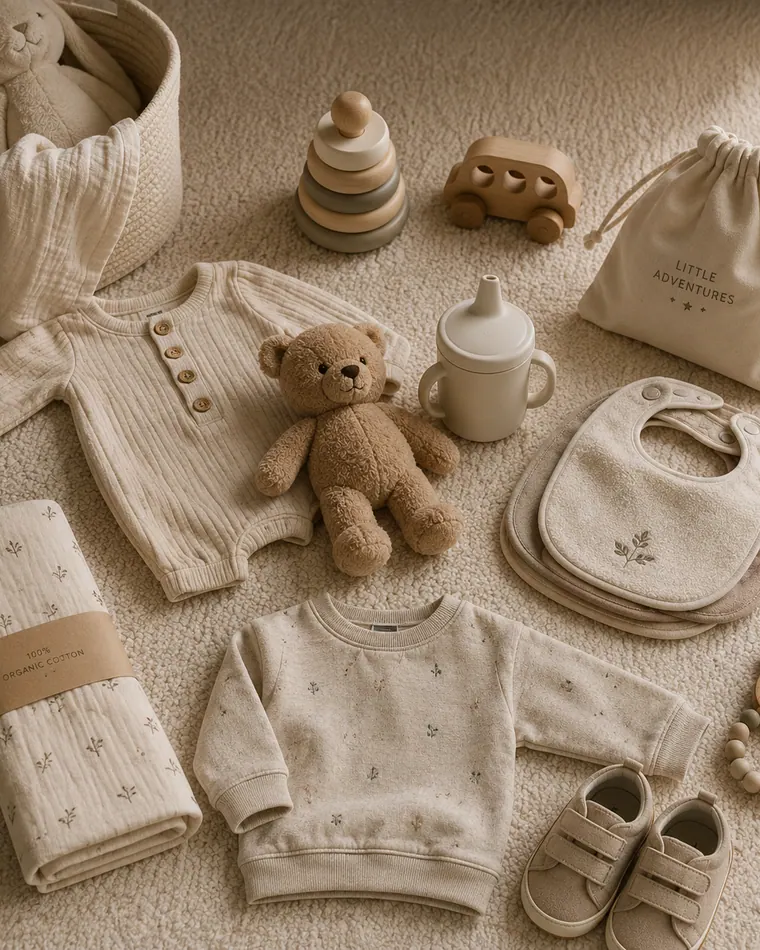
Age grading decides the rules, and the rules decide the product
The first decision in this category is not the design, it is the age the product is for. Age grading determines which regime applies — a soft item for a newborn, a plaything for a toddler and a garment for an eight-year-old are governed differently, tested differently and labelled differently. Get the grading right at the brief stage and everything downstream is orderly; get it wrong and a range has to be re-tested, re-labelled or withdrawn. This is the reason we ask for the intended age before anything else.
What applies is genuinely substantial and it is product-specific. Toys have a dedicated EU safety regime with requirements on mechanical and physical properties, flammability, chemical content, warnings and marking, and a technical file behind it. Childcare articles — cots, high chairs, carriers, dummies and similar — have their own product-specific standards. Children's clothing carries restricted-substance and mechanical-safety expectations, and cords and drawstrings on children's garments are a recognised strangulation hazard covered by a dedicated standard. We can name these regimes because they are well established; which clauses apply to your product takes specialist assessment and accredited laboratory testing, and Library of Trade coordinates both rather than substituting for them.
The commercial consequence is that testing is a real per-SKU cost with its own calendar, and it re-triggers. A colour change, a material substitution, a new trim, a different supplier for the same component: each can invalidate an existing test report, because the report describes what was tested and not what the product is called. That is why material substitution without authorisation is the most expensive thing that can happen in a children's range, and why traceability by batch is not bureaucracy here.
Then the ordinary sourcing economics, which are unusually unforgiving. A size ladder multiplies SKUs against a short selling window per size, so minimums fragment across many small quantities, and retailers frequently impose their own protocols above the legal baseline. Softness — what parents actually buy — comes from fibre, yarn and finishing decisions made at the mill, which is why buyers here ask for schemes like OEKO-TEX or GOTS. Those are voluntary schemes chosen commercially, not legal requirements.
For brands that would rather over-prepare than recall
Situations we see here often, not an exhaustive list.
- Importers who need the testing and documentation behind a range they already sell
- Ecommerce and DTC childrenswear brands developing their own patterns and fits
- Retailers building a private label baby or kids range with their own protocols
- Established adult brands launching a mini or kids line for the first time
- Nursery and lifestyle brands adding textiles, bedding or soft goods
What Library of Trade helps with
The points this category asks for most often, not everything we do.
-
Age grading settled first
We establish the intended age and use before development starts, because the grading decides the regime, and a regime discovered late is a range redesigned late.
-
Factories with a record
We match to suppliers with documented children's-product experience, existing test history and current audit status, because a factory that has never been tested against these requirements is a slow way to learn them.
-
Safety designed in
Product development addresses the recurring hazards directly — cords and drawstrings, small and detachable parts, seam softness, accessible fill, sharp edges — so the design is not asked to pass a test it was never built for.
-
Testing coordinated with accredited labs
We plan the testing programme, reserve pre-production samples for it and coordinate with accredited laboratories and specialist assessors. We coordinate; we are not the assessor, and requirements need product-specific assessment.
-
Traceability and change control
Batch traceability and a firm no-substitution rule are built into the supplier agreement, because an unauthorised material change can invalidate a test report and the documentation that rests on it.
-
Documentation as a deliverable
Test reports, the technical file, declarations and labelling are managed as part of the order, not chased after arrival. Our note on EU manufacturing compliance sets out the shape of it.
How Library of Trade sources this category
-
01
Brief
The intended age range first, because it decides which requirements apply — then product type, sizes, quantity per size and colour, target cost and the market it is sold into.
-
02
Product Development
Patterns and safety-driven design: no cords or drawstrings where they are prohibited, no detachable small parts, soft seams and flat labels, plus grading across a size ladder.
-
03
Materials
Fibre, yarn and dye selection with restricted substances in view, plus trims, fastenings, fill, wood species and coatings — every component chosen as something that will have to be tested.
-
04
Factory Matching
Matching on documented children's-product experience, existing test reports, audit status and traceability discipline — a capable adult-product factory is not automatically a candidate here.
-
05
Sampling
Fit and construction samples per size, then pre-production samples set aside specifically for accredited laboratory testing before bulk material is committed.
-
06
Production
Production with batch traceability on every material and no substitution without re-testing, because a changed component means the existing test report no longer describes the product.
-
07
Quality
Accredited testing to the applicable requirements, mechanical safety checks, restricted-substance results, labelling and marking verification, and a complete documentation pack.
-
08
Logistics
The documentation travels with the goods: test reports, declarations and traceability records assembled for the importer's obligations alongside origin, duty and delivery.
Materials, processes and supplier types
A selection of what comes up in this category, not a complete list. If your material, process or supplier type is not here, name it in your brief.
Materials
- Combed and ring-spun cotton jersey
- Organic cotton (GOTS-certified options)
- Cotton muslin and terry
- Merino and cotton knitwear yarns
- OEKO-TEX certified fabric options
- Recycled polyester fill
- Untreated hardwoods for toys
- Water-based paints and coatings
Processes
- Pattern making and age-appropriate grading
- Circular knitting and dyeing
- Cut-and-sew with flatlock and soft seams
- Printed label and heat-transfer application
- Embroidery and appliqué
- Wooden toy turning and sanding
- Soft toy assembly and stuffing
- Accredited laboratory testing
Supplier types
- Childrenswear cut-and-sew factory
- Baby knitwear manufacturer
- Certified organic cotton mill
- Soft toy manufacturer
- Wooden toy workshop
- Trim and label supplier
- Accredited testing laboratory
- Specialist compliance assessor
Quality, compliance and risk
The checks that apply here most often. What your product needs is decided per project.
Say the uncomfortable part first: children's products are the most heavily regulated category on this list, requirements vary substantially by product and by age, and what applies to yours needs specialist assessment. Library of Trade coordinates testing and documentation with accredited laboratories and qualified assessors, and we work with factories that have a record in the category — we do not claim to be able to source any children's product without that assessment, and where something falls outside what we should be sourcing we will say so.
What we can describe is the structure. Toys have a dedicated EU safety regime covering mechanical and physical properties, flammability, chemical content, warnings and marking, supported by a technical file and a declaration. Childcare articles have their own product-specific standards. Children's clothing carries restricted-substance obligations under REACH and mechanical-safety expectations, with cords and drawstrings covered by a dedicated standard because they are a recognised strangulation hazard. Sleepwear flammability expectations differ between markets. Over all of it sits the general product-safety framework and the importer's own obligations, which do not transfer to a supplier because a factory said it was compliant.
And keep voluntary schemes in their place. OEKO-TEX, GOTS and GRS are chosen, not required — commercially valuable, frequently demanded by retailers, and not a substitute for the testing that legal compliance rests on. A certificate on a fabric is not a test report on a finished garment.
- Age grading fixed at the brief stage, since it determines which requirements apply
- Accredited laboratory testing on pre-production samples, planned into the timeline rather than added to the end
- Mechanical safety checks: small and detachable parts, cords and drawstrings, sharp points and edges, accessible fill
- Restricted-substance testing on the actual materials used in production
- Batch traceability on every material, with substitution prohibited without re-testing
- Labelling, marking and warnings verified against the applicable requirements for the market of sale
- A complete technical file and declaration before the goods are placed on the market, with voluntary certifications kept separate from legal compliance
Sourcing regions
Regions that often come into play for this category. Not a ranking and not a complete list.
-
Portugal
A strong childrenswear and baby knitwear base familiar with European requirements, with low minimums and short transit. Unit costs are high relative to Asia, but where testing is per SKU and quantities per size are small, that arithmetic often works out better than it looks.
-
Turkey
Vertical cotton and baby knitwear with mills and garment plants close together, competitive costs and days rather than weeks of transit into Europe. A practical route for a range that reorders through a season.
-
India
Substantial certified organic cotton capacity and competitive costs on cotton babywear, which is why many organic ranges originate there. The management effort goes into consistency and into documenting certification claims through the chain.
-
China
The broadest capability for toys, hard goods and nursery items, with deep familiarity with children's-product testing because the category has long demanded it. Larger minimums and sea transit are the trade-off, and factory selection matters more here than anywhere.
-
Poland and Central Europe
Nursery textiles and soft goods close to European markets, with short reorder cycles and low minimums. Useful for bulky nursery items where freight from Asia would consume the cost advantage.
Questions about this category
What testing does a children's product need before we can sell it in the EU?
It depends on the product and the age it is intended for, and it has to be assessed for that specific item. Toys fall under a dedicated safety regime; childcare articles have their own standards; clothing carries restricted-substance and mechanical-safety expectations. The practical answer is accredited laboratory testing against the applicable requirements plus a technical file — determined by a specialist, not by a general rule.
Why does age grading matter so much?
Because it decides which rules apply. A product intended for under-threes is treated differently from one for older children, and the same object can sit in different regimes depending on how it is presented and marketed. Fixing the grading at the brief stage is the cheapest decision in the whole project.
Does a colour change mean we have to test again?
Often yes. A test report describes the materials that were tested, so a new dye, a different fabric lot from another mill, or a substituted trim can put the product outside what was tested. This is why change control and batch traceability matter more in this category than in any other.
Is OEKO-TEX or GOTS certification legally required for babywear?
No. Both are voluntary schemes that a buyer or supplier chooses, and retailers frequently require them commercially. Legal compliance rests on restricted-substance rules, mechanical safety and labelling obligations, which are separate and are demonstrated by testing rather than by a fabric certificate.
Can you source any children's product?
No, and we would rather say that plainly. This category is heavily regulated, requirements vary by product and age, and some items need specialist expertise and testing regimes we do not claim. We coordinate assessment and testing with qualified specialists, and where a product falls outside what we should be sourcing we will tell you instead of taking the order.
Who is legally responsible if a product fails — us or the factory?
As the party placing the product on the EU market you carry importer obligations, and a factory's assurance does not transfer them to the factory. That is precisely why the testing, the technical file and the traceability records need to be yours and to be complete, rather than something a supplier keeps and describes.
Why are minimums difficult on a kids range?
Because a size ladder multiplies SKUs while the selling window per size is short, so an order fragments into many small quantities. Limiting the size ladder, limiting the colour count, or producing closer to Europe where minimums are lower are the three levers that usually make a first range viable.
Related reading
Related industries
Bring us the brief. We'll build the chain.
Tell us the product and the age range it is for, and we will come back with the manufacturing routes, the testing that has to sit behind them, and where specialist assessment is needed.